


Sunday, June 27, 2010
THE QUEEN'S PAWN by Christy English, 2010.
 Well written first novel by this author. In 1169, Princess Alais of France is sent to England at age nine to be brought up in the court of Eleanor of Aquitaine until it is time for Alais' marriage to Richard, son of Eleanor and King Henry II. The innocent Alais is taken in by Eleanor, and they grow to love one another, and Alais falls for Richard as well. She knows that she is a pawn on the political chessboard, and that her marriage to Richard is to keep peace between England and France. The fact that Alais' father, King Louis VII, was once married to Queen Eleanor and divorced her, adds a spicy element. By 1172, Eleanor has taught Alais well, providing her with the skills necessary to play the power game as a woman in a man's world. Suddenly finding herself shockingly betrayed by both Richard and Eleanor, Alais is determined to chart her own future, involving the King and becoming a threat to the Queen herself. Their love for each other could be destroyed by dark secrets, lies, rivalry, political machinations, and revenge. I found this somewhat reminiscent of Goldman's The Lion in Winter in terms of language and politics and general personal loyalties and betrayals. The whole love/hate thing permeates the book.There is more of a romantic element present, but it didn't bother me. I thought the author captured her characters, most of whom were real people, very well, with all their various traits, emotions, and flaws. Set mainly in the castles of Windsor and Winchester, English provides ample historical details that add color to the story. Having the story told by Alais and Eleanor in alternating chapters was an interesting choice, as it enabled the reader to view some events from two different viewpoints, plus allowed the characters to develop more. It is always interesting to me to read a good story about an historical personage that not much has been written about. Recommended.

Tuesday, June 22, 2010
CLEOPATRA'S DAUGHTER by Michelle Moran, 2009.
 I practically gobbled this down, it read so quickly. I am a big fan of novels about ancient Rome (I, Claudius is still my favorite), plus having enjoyed Moran's other novels set in ancient Egypt, I expected this to be good too, and I wasn't disappointed. Beginning with Rome's takeover of Alexandria and Egypt, the deaths of Antony and Cleopatra and Octavian's taking their orphaned children, Alexander, Selene, and Ptolemy to Rome, she spins a fascinating story of their lives in ancient Rome. Little Ptolemy dies en route, but ten year old twins Alexander and Selene, once in Rome, are placed under the care of Octavian's sister, the caring Octavia. Once married to the twins' father, Antony, she is a kind and compassionate woman who loves children, and she has a houseful--her own, plus assorted others at various times from former spouses and relatives. As the twins are educated and they mature in Octavia's household, they learn the ways of Roman society, its customs and attitudes and ideas, especially what is valued and not valued. I thoroughly enjoyed Moran's portrayals of the young people, with their various feelings, foibles and problems: Tiberius, Marcellus, Julia, Antonia, Claudia, and Juba, all of whom played important parts in the lives of Alexander and Selene. And the more mature and familiar characters of Octavia, Livia, Agrippa, and Octavian/Augustus are every bit as colorful and real. Especially liked the scenes between Octavia and the acidic Livia. Moran brings all these characters and others to life very vividly, as well as providing wonderfully descriptive passages of Roman life, in all its glory and horror. The whole slavery issue and the practice of disposing of unwanted children made for interesting and awful reading. Told from mostly from Selene's point of view, there is plenty of action, period detail, and enough juicy dialogue to keep the narrative moving right along. Overall, a very well told story, smoothly written, and a great read.

Wednesday, June 16, 2010
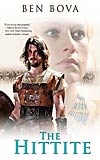
I just finished this yesterday. Being a Trojan War fan, I decided I'd give it a try. I was familiar with Ben Bova as a scifi author, but had never read any of his books, as I'm not really a fan of that genre. This novel is about the Trojan War, but told from the point of view of an outsider, a Hittite soldier, Lukka, who after the Hittite king is murdered and the empire at Hattusas is in chaos, discovers his wife and two young sons have been stolen away and taken to the west. He and others in his troop follow the trail, participate in various ambushes, and end up in the Achaian camp outside of the walls of Troy. The story is at times very familiar, with the usual Greek and Trojan cast: Odysseos, Agamemnon, Hector, Paris, and Helen. Bova makes the character of Lukka to be an unsung hero of the war, a capable and articulate soldier who makes logical and reasonable suggestions for battle strategy, builds a siege tower (which becomes the basis for the great horse), serves as a messenger for both sides, and is present for almost every important event. There is plenty of battle action, assorted violence, and gore, and enough period detail for setting the story, but it's a pretty shallow novel. Some of the language was jarringly modern.The author puts his own spin on some of the more well known episodes of the story, and offers up different reasons for some characters' actions. And the conclusion, which involves Helen and Lukka, totally turned me off. Mostly, I felt as though I was reading a movie script, and honestly, the cover reminds me of a movie poster. Was it a waste? Not completely. But there are certainly better novels out there about Troy than this. Whom The Gods Would Destroy by Richard Powell, Song of Troy by Colleen McCullough, and War at Troy by Lindsay Clarke are three I would recommend over this one.
Saturday, June 12, 2010
PRIVATE LIFE by Jane Smiley, 2010.
After having my interest in it piqued by several reviews, I picked this up as I walked past the new book shelf in my library one day to read. I remember enjoying A Thousand Acres very much as a rich and satisfying story based on King Lear. The basic story in this novel concerns a young woman, Margaret Mayfield, born and bred in post-Civil War Missouri, who is taught in all ways by her mother Lavinia to be a good wife, and is at 27 an old maid with no real prospects for a husband. Into her life comes Captain Andrew Jackson Jefferson Early, an astronomer who needs a wife. At the urging and manipulation of their mothers, the two marry, move to California, where he is posted to a San Francisco-area island to be in charge of the navy's observatory, and Margaret sets about making a life for them. His devotion to the study of science takes over his life, leaving little room for Margaret, who slowly realizes that everything is about Andrew and his professional and private needs and she must support him in every way by cooking and cleaning and typing his manuscripts, etc. Their lives change somewhat as they suffer the loss of a child, as they age, as they contend with new ideas and things like automobiles, and deal with important national issues and crises--the San Francisco earthquake, World War I, Pearl Harbor, the Japanese-American internments, and find their loyalties are tested. Margaret, so hopeful of having a fulfilling life as a wife and mother, eventually has to accept that her life is not what she would have wanted for herself. This story just somehow never quite involved me very much--lots of appropriate details and impressions of life during the period of post-Civil War to World War II, several interesting and likable characters, like Mrs. Lear and her sons, the Kimura family, and so on, but the two main characters just seemed rather one note: Andrew is hugely egotistical and often unpleasant; Margaret is at times almost disturbingly placid and accepting of everything. If Smiley's point was to show how a marriage can start out so promising and then over time descend into a sort of nothingness and emptiness, then she succeeded, as I felt very little for either Margaret or Andrew by the book's end. I have no complaint about Smiley's writing, as she's very readable; I guess it just wasn't a very enjoyable story for me and in the end not very satisfying.
After having my interest in it piqued by several reviews, I picked this up as I walked past the new book shelf in my library one day to read. I remember enjoying A Thousand Acres very much as a rich and satisfying story based on King Lear. The basic story in this novel concerns a young woman, Margaret Mayfield, born and bred in post-Civil War Missouri, who is taught in all ways by her mother Lavinia to be a good wife, and is at 27 an old maid with no real prospects for a husband. Into her life comes Captain Andrew Jackson Jefferson Early, an astronomer who needs a wife. At the urging and manipulation of their mothers, the two marry, move to California, where he is posted to a San Francisco-area island to be in charge of the navy's observatory, and Margaret sets about making a life for them. His devotion to the study of science takes over his life, leaving little room for Margaret, who slowly realizes that everything is about Andrew and his professional and private needs and she must support him in every way by cooking and cleaning and typing his manuscripts, etc. Their lives change somewhat as they suffer the loss of a child, as they age, as they contend with new ideas and things like automobiles, and deal with important national issues and crises--the San Francisco earthquake, World War I, Pearl Harbor, the Japanese-American internments, and find their loyalties are tested. Margaret, so hopeful of having a fulfilling life as a wife and mother, eventually has to accept that her life is not what she would have wanted for herself. This story just somehow never quite involved me very much--lots of appropriate details and impressions of life during the period of post-Civil War to World War II, several interesting and likable characters, like Mrs. Lear and her sons, the Kimura family, and so on, but the two main characters just seemed rather one note: Andrew is hugely egotistical and often unpleasant; Margaret is at times almost disturbingly placid and accepting of everything. If Smiley's point was to show how a marriage can start out so promising and then over time descend into a sort of nothingness and emptiness, then she succeeded, as I felt very little for either Margaret or Andrew by the book's end. I have no complaint about Smiley's writing, as she's very readable; I guess it just wasn't a very enjoyable story for me and in the end not very satisfying.
Tuesday, June 1, 2010
RETURN FROM TROY by Lindsay Clarke, 2005.
For some reason, I read War at Troy several years ago, but neglected to go ahead and read this sequel as well. I finally borrowed it and was totally enthralled. Picking up with the horrible sacking of Troy, Clarke does an excellent job of following the various survivors of the carnage and relating the various threads of their stories through the next ten years. It's all here: Menelaus and beautiful Helen, the woman who caused so much strife and agony; ambitious Agamemnon and Cassandra's fates at the hands of vengeful Clytaemnestra; Penelope's patient waiting for her husband's return amid the growing menace in her palace; Odysseus's son Telemachus's coming of age and his rage over his father's long absence; and Odysseus's many adventures in foreign parts as he journeys throughout the Mediterranean, trying to find the path that leads him home. Their stories are so familiar, and yet the author presents them in a fresh way that is enjoyable and entertaining. His apt descriptions of life in the ancient world, including daily routines, the war with the Dorian invaders, slavery, idol worship, terrific tempests, etc. all add color to the multiple stories. Well written and well told, if you enjoy stories of the Trojan War and what happened after, this is quite worthwhile reading.
For some reason, I read War at Troy several years ago, but neglected to go ahead and read this sequel as well. I finally borrowed it and was totally enthralled. Picking up with the horrible sacking of Troy, Clarke does an excellent job of following the various survivors of the carnage and relating the various threads of their stories through the next ten years. It's all here: Menelaus and beautiful Helen, the woman who caused so much strife and agony; ambitious Agamemnon and Cassandra's fates at the hands of vengeful Clytaemnestra; Penelope's patient waiting for her husband's return amid the growing menace in her palace; Odysseus's son Telemachus's coming of age and his rage over his father's long absence; and Odysseus's many adventures in foreign parts as he journeys throughout the Mediterranean, trying to find the path that leads him home. Their stories are so familiar, and yet the author presents them in a fresh way that is enjoyable and entertaining. His apt descriptions of life in the ancient world, including daily routines, the war with the Dorian invaders, slavery, idol worship, terrific tempests, etc. all add color to the multiple stories. Well written and well told, if you enjoy stories of the Trojan War and what happened after, this is quite worthwhile reading.
Thursday, May 13, 2010
Finished late last night: FIGURES IN SILK by Vanora Bennett, 2009.
Fine, smoothly written narrative, with plenty of period details, set during the period after the Wars of the Roses. The story concerns the Lambert sisters, Isabel and Jane, each of whom becomes the mistress of a king. Jane, who marries and divorces Will Shore, becomes the mistress of King Edward IV. Isabel becomes unknowingly acquainted with Richard of Gloucester, just before her marriage to Thomas Claver. Later, they meet again under other circumstances, and she eventually becomes Richard's mistress. The majority of the story follows Isabel, who, after her husband's untimely demise, chooses to apprentice herself to her mother-in-law, the hard-nosed silkwoman Alice Claver. Isabel has ambitions to break the Lombards' hold on the silk making industry in England and to found her own silk making house. To that end, she establishes connections and forms a network which eventually leads her to ask King Edward for the funds and assistance to set her plans in motion.When Edward dies suddenly, leaving the English throne to his young son, and England is thrown into the turmoil of Richard III, Isabel's life changes dramatically and completely, as does Jane's. I enjoyed Bennett's previous book Portrait of an Unknown Woman very much, but found this novel to be rather slow going and almost tedious in spots. In my opinion, Jane was the more interesting character, and I would have liked more of her story. I did enjoy Bennett's portrayals, however brief, of both Elizabeth Woodville and young Elizabeth of York. A good read, just not as good as I had hoped it would be.
Fine, smoothly written narrative, with plenty of period details, set during the period after the Wars of the Roses. The story concerns the Lambert sisters, Isabel and Jane, each of whom becomes the mistress of a king. Jane, who marries and divorces Will Shore, becomes the mistress of King Edward IV. Isabel becomes unknowingly acquainted with Richard of Gloucester, just before her marriage to Thomas Claver. Later, they meet again under other circumstances, and she eventually becomes Richard's mistress. The majority of the story follows Isabel, who, after her husband's untimely demise, chooses to apprentice herself to her mother-in-law, the hard-nosed silkwoman Alice Claver. Isabel has ambitions to break the Lombards' hold on the silk making industry in England and to found her own silk making house. To that end, she establishes connections and forms a network which eventually leads her to ask King Edward for the funds and assistance to set her plans in motion.When Edward dies suddenly, leaving the English throne to his young son, and England is thrown into the turmoil of Richard III, Isabel's life changes dramatically and completely, as does Jane's. I enjoyed Bennett's previous book Portrait of an Unknown Woman very much, but found this novel to be rather slow going and almost tedious in spots. In my opinion, Jane was the more interesting character, and I would have liked more of her story. I did enjoy Bennett's portrayals, however brief, of both Elizabeth Woodville and young Elizabeth of York. A good read, just not as good as I had hoped it would be.
Tuesday, May 4, 2010

LOVING FRANK by Nancy Horan, 2007.
A beautifully written novel about the scandalous love affair between the famous architect Frank Lloyd Wright and Mamah Borthwick Cheney, which shocked and dismayed the Chicago-Oak Park area, as both were married when they began their affair. Covering the years 1907-1914, Horan easily draws the reader into the lives of her characters and gets him involved. After the initial shock and several years' separation, Mamah's husband Edwin divorced her and then remarried, and Mamah and Frank, whose wife Catherine refused to divorce him, lived in Europe. They live together off and on, each return to the States, live in Japan during a job Frank has there, and eventually settle at Frank's creative dream home--a fabulous, nature-inspired house, Taleisin, in Wisconsin. Horan does a wonderful job of dramatizing the many doubts and worries the couple encountered in themselves and each other: financial woes, emotional problems, issues with each set of children, Mamah's determination to use her knowledge and education to make her own mark, Frank's self-centeredness, Mamah's ruined relations with her beloved sister Lizzie and the anguish each felt about living their lives in the manner they chose. Horan's writing style is graceful, beautifully descriptive, and flows smoothly. Her portrayals of Mamah and Frank are realistic and thought-provoking and complex. Overall, it's a fascinating, engrossing read about two very passionate people who found each other and created a lurid scandal by wanting to be together, the tough choices they were forced to make in order to do so, and the terrible tragedy that befell them both. A tremendously worthwhile read. I highly recommend it.
Subscribe to:
Posts (Atom)
