


THE TUDORS: The Complete Story of England's Most Notorious Dynasty by G.J. Meyer, 2010.
An excellently written, fresh look at the five monarchs of England known as the Tudors. In a single volume, the author provides an enlightening, myth-debunking, enthralling narrative that covers all the Tudors from the founder of the dynasty, Henry VII, to the last of them, the glorious Elizabeth I. Great description but not so overloaded with detail that the reader gets bogged down, Meyer makes good use of his sources and recent scholarship on this era of English history. All the sinners and saints, statesmen, lovers, victims, the wives of Henry VIII, the Lady Jane Grey episode, Mary I's fatal Spanish marriage, the boy king Edward who wanted a second Protestant Reformation in England--it's all here and done up in very readable and entertaining style. One complaint I read recently was that the author presents too many bad (negative) aspects of these monarchs; I disagree, his goal is to de-romanticize them and make them more human. There were also complaints of events/issues/important figures being left out, but honestly, it's a survey type book, and some things have to be left out. The subtitle is misleading in that sense. I found the book well worth reading, and I would recommend it even for Tudor addicts who think they know all there is to know about them, and even though the length (600+ pages) could be off-putting, I would recommend it to anyone who wants a good general introduction to the Tudors, their lives, and that period of English history.
Tuesday, November 30, 2010

Wednesday, November 10, 2010
A KINGDOM STRANGE: The Brief and Tragic History of the Lost Colony of Roanoke by James Horn, 2010.
 Excellently researched and smoothly written, this reads almost like a novel. Why did dozens of English men, women, and children leave England and voyage to a remote area of the New World? Why was Sir Walter Raleigh so interested in establishing a colony there? And why did it fail? What happened there that caused the disappearance of so many people, never to be explained? Horn does a great job of piecing together the story of the "Lost Colony" from contemporary records and writings, examining and re-examining, and he puts forth his own theory of why the settlement was made and what happened to those Roanoke Island settlers in 1587. Full of great details of seafaring and pirating, Spanish attacks, life at sea and in the new land of Virginia, Indian relations, and intrigues involving Raleigh and others within Queen Elizabeth's court, Horn packs it all in, but does so in a way not to overwhelm the reader. A nicely done, very readable account of one the truly great mysteries in American history.

Wednesday, November 3, 2010
ISAAC'S STORM by Erik Larson, 1999.
After reading this nonfiction work, I realized why I had put off reading it for so long: I'm just not that interested in the history of weather forecasting. The National Weather Service was still relatively new in 1900 and they weren't taken very seriously, which created all kinds of issues with the government. But there was too much of it for my taste, especially the politcal infighting, plus I just didn't find Isaac Cline a very sympathetic character overall. There are those readers who would get into that sort of detail. For myself, I felt the pace didn't pick up until the narrative became more about the storm itself. The hurricane hit Galveston, Texas, on Sept. 8, 1900--Larson provides wonderfully vivid descriptions of what the hurricane did, the almost total devastation of the city, the number of deaths, the interwoven vignettes of various people and what happened to them, and then the whole aftermath of the storm. Some enthralling reading here: Clara Barton arrived with the Red Cross, people came looking for loved ones gone missing, gawkers came in on trains to see the spectacle of ruin, workers going through enormously high mounds of wreckage, the wholesale burials and burnings of over 6,000 bodies, unusual discoveries, etc. Was it worth my time and effort? Yes, I'm not sorry I read it, I found it enjoyable as a whole, but I was much more interested in the storm itself and the effects of it as opposed to the political maneuverings and intrigues and feuds within the bureau before the monster storm struck Galveston.
After reading this nonfiction work, I realized why I had put off reading it for so long: I'm just not that interested in the history of weather forecasting. The National Weather Service was still relatively new in 1900 and they weren't taken very seriously, which created all kinds of issues with the government. But there was too much of it for my taste, especially the politcal infighting, plus I just didn't find Isaac Cline a very sympathetic character overall. There are those readers who would get into that sort of detail. For myself, I felt the pace didn't pick up until the narrative became more about the storm itself. The hurricane hit Galveston, Texas, on Sept. 8, 1900--Larson provides wonderfully vivid descriptions of what the hurricane did, the almost total devastation of the city, the number of deaths, the interwoven vignettes of various people and what happened to them, and then the whole aftermath of the storm. Some enthralling reading here: Clara Barton arrived with the Red Cross, people came looking for loved ones gone missing, gawkers came in on trains to see the spectacle of ruin, workers going through enormously high mounds of wreckage, the wholesale burials and burnings of over 6,000 bodies, unusual discoveries, etc. Was it worth my time and effort? Yes, I'm not sorry I read it, I found it enjoyable as a whole, but I was much more interested in the storm itself and the effects of it as opposed to the political maneuverings and intrigues and feuds within the bureau before the monster storm struck Galveston.
Tuesday, October 26, 2010
Vampires and Cannibals and Siblings, oh my!
DEXTER IS DELICIOUS by Jeff Lindsay, 2010.
 I stayed up till almost midnight finishing this fifth instalment in the Dexter series. This one finds Dexter learning to be a new father to Lily Anne, plus dealing with the return of his psychopathic killer brother Brian and helping his sister Sergeant Deborah Morganwith a horrific case involving murdered victims being eaten and finding a missing teenage girl who could be next on the menu. Loaded with Dexter's dark humor, with enough sex and violence to keep the story moving at a fast pace, this is enjoyable and thrilling. Dexter is such an interesting character in this novel, with his attempts to change himself for Lily Anne, to give up his listening to the his Dark Passenger, and to lead a more human life with Rita and their family. Events conspire against him all through the book, and it doesn't help matters at all that near the end of the book his frustrated sister makes a request that startles even Dexter. The very premise of this series has intrigued me from the beginning, and Lindsay has kept my interest up with each succeeding adventure. I find them generally suspenseful, humorous, exciting, and totally entertaining. With plenty of unresolved issues at the end of this story, I'm looking forward to the next chapter in Dexter's life.
 I stayed up till almost midnight finishing this fifth instalment in the Dexter series. This one finds Dexter learning to be a new father to Lily Anne, plus dealing with the return of his psychopathic killer brother Brian and helping his sister Sergeant Deborah Morganwith a horrific case involving murdered victims being eaten and finding a missing teenage girl who could be next on the menu. Loaded with Dexter's dark humor, with enough sex and violence to keep the story moving at a fast pace, this is enjoyable and thrilling. Dexter is such an interesting character in this novel, with his attempts to change himself for Lily Anne, to give up his listening to the his Dark Passenger, and to lead a more human life with Rita and their family. Events conspire against him all through the book, and it doesn't help matters at all that near the end of the book his frustrated sister makes a request that startles even Dexter. The very premise of this series has intrigued me from the beginning, and Lindsay has kept my interest up with each succeeding adventure. I find them generally suspenseful, humorous, exciting, and totally entertaining. With plenty of unresolved issues at the end of this story, I'm looking forward to the next chapter in Dexter's life.
Thursday, October 7, 2010
THE HORSE IN VIRGINIA by Julie A. Campbell, 2010.
 Excellently put together coffee table style book about the history of the horse in Virginia. The first horses came on ship to Jamestown in 1609 and ended up being eaten along with dogs, rats, and practically anything else that could be found, during the "Starving Time," that horrendous winter of 1609-10. After the colony was more established, more horses arrived and flourished. Campbell divides her book into time periods, with plenty of wonderful illustrations. Lots of good material here on Civil War horses, and more modern horses like Secretariat, as well as horse racing history in the Commonwealth. It's a good browsing book, not as in-depth perhaps as some would like. I found it pleasant to dip into, enjoyed my favorite parts of it, and skimmed the others. If you are interested in a brief history with beautifully done photos and historical illustrations, then this will serve you well. Campbell gives a good bibliography of sources, too, for further reading.
Monday, September 20, 2010
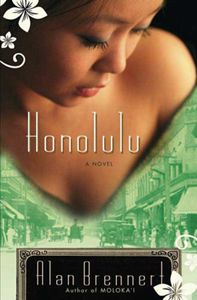
With a well written, smoothly flowing narrative, Brennert's second novel depicts the lives of four Korean "picture brides" who journey to Hawaii in 1914 to marry men they have never met. Regret (so named by her parents because daughters in Korea were considered unimportant enough for formal names) is the main character of the story. A somewhat feisty and independent girl, she is determined to obtain an education (not usual for girls in Korea) and make a different and better life for herself. A sympathetic relative helps her learn to read in secret. Then, seeing a chance to help her family financially and escape from her strict father, Regret and her childhood friend Sunny decide to make the journey to the island paradise of Hawaii to marry wealthy and handsome men who will give them good lives. All they have are photographs of the men they will marry. On the steamship they meet more girls--Beauty, Wise Pearl, and Jade Moon--all of whom become part of Regret's (now called Jin) circle. When they reach Honolulu, Sunny changes her mind and takes the return ship back to Korea; the other girls are quickly married off to their suitors--none of whom are what they expected. Disappointment, bitterness, backbreaking work, illness, horrific abuse, childbirth, disease, and violence becomes part of their lives, but they are resilient, smart, determined, plucky, and fiercely loyal, and these young girls create a support system which eventually enables them each to find happiness. Brennert follows these women through their triumphs and tragedies, ending the main story in 1937, but includes a 1957 afterword to further tie up loose ends. He is excellent with his historical details about Hawaii, Korea, the various customs and foods and clothes, politics, living conditions in the city and on the plantations, etc., all portrayed realistically and shockingly at times. He weaves through his narrative the stories of the real people who became the characters Charlie Chan and Sadie Thompson, and involves his fictional characters in the sensational scandal concerning rape and lynching known as the Massie case. He includes the racial issues of the time concerning Koreans, Japanese and Hawaiians, the problems of the government, prostitution, workers' strikes, etc., in convincing and interesting ways. Jin is a sympathetic and believable heroine, and if some of the storylines' resolutions seem a bit too pat, it is still an enjoyable piece of fiction. I would say that it isn't as compelling or as emotionally involving as Moloka'i, his previous book, but a good tale nonetheless.
Tuesday, September 14, 2010
THE THREE MISS MARGARETS by Louise Shaffer, 2003.
If you enjoy the likes of Fannie Flagg, this may appeal to you. Set in a small town in southern Georgia, the main part of the story involves a dark secret buried for years. Laurel Selene McCready, a white trash reporter for the local paper, starts digging around after meeting an out of town writer working on a book concerning a former resident, Vashti Johnson. Miss Peggy, Dr. Maggie, and Miss Li'l Bit, who have known each other for years, are solid citizens of Charles Valley, Georgia, and thirty years before, they helped do a terrible thing--they hid the truth about a murder in order to protect someone close to them. In so doing, however, other lives were affected in various ways. When Laurel starts poking around and asking questions, old memories are stirred up and loyalties tested. These women must decide whether it's the right time to reveal the truth about what happened. Enjoyable, suspenseful, with plenty of quirky characters, strong regional flavor, and humor. It's partly a mystery, but it's mostly about friendship, loyalty, righting wrongs, and forgiveness.
If you enjoy the likes of Fannie Flagg, this may appeal to you. Set in a small town in southern Georgia, the main part of the story involves a dark secret buried for years. Laurel Selene McCready, a white trash reporter for the local paper, starts digging around after meeting an out of town writer working on a book concerning a former resident, Vashti Johnson. Miss Peggy, Dr. Maggie, and Miss Li'l Bit, who have known each other for years, are solid citizens of Charles Valley, Georgia, and thirty years before, they helped do a terrible thing--they hid the truth about a murder in order to protect someone close to them. In so doing, however, other lives were affected in various ways. When Laurel starts poking around and asking questions, old memories are stirred up and loyalties tested. These women must decide whether it's the right time to reveal the truth about what happened. Enjoyable, suspenseful, with plenty of quirky characters, strong regional flavor, and humor. It's partly a mystery, but it's mostly about friendship, loyalty, righting wrongs, and forgiveness.
Subscribe to:
Posts (Atom)
